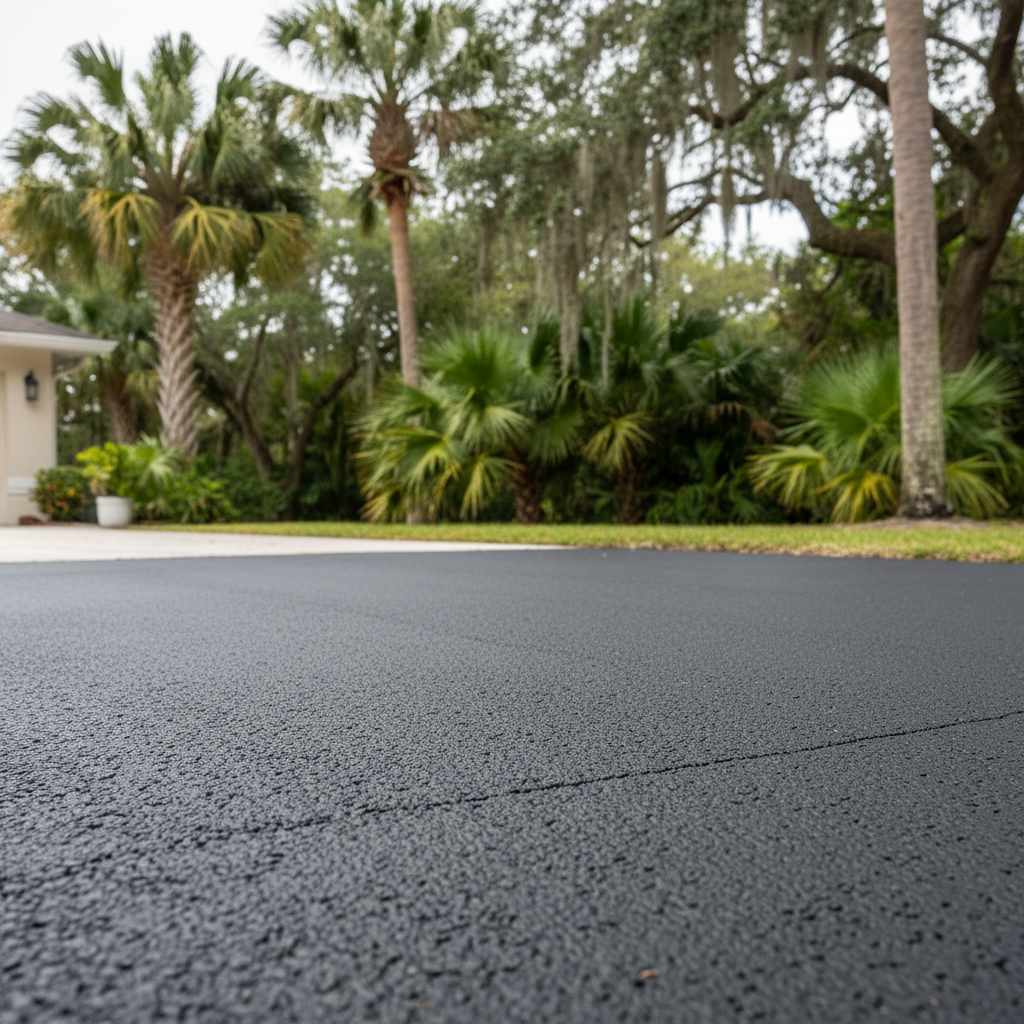
When you walk out to your driveway in Baldwin Park and notice a jagged crack running down the middle, your first instinct is often to grab a tube of filler from the hardware store and finish the job before lunch. Sometimes that works. Other times, you are just spending money on a surface symptom while the real issue festers underneath the Florida sun and sudden afternoon downpours.
Apex Asphalt Co looks at what you can realistically handle yourself, and when you really need to call in backup for Asphalt Repair in Orlando, FL.
Before You Start: Assessing the Damage
Take a good look at your asphalt before you buy any supplies. Hairline cracks under a quarter-inch wide are prime candidates for a Saturday morning project. You clean them out, grab some rubberized cold pour crack filler, and the crack is sealed.
If you are dealing with alligator cracking—that web-like pattern that looks like a reptile skin—put the caulk gun down right away. That pattern means your sub-base has failed. Water got trapped, or the sandy Orlando soil underneath washed out during the rainy season. Surface patching will not fix a weak foundation.
During the Fix: DIY vs. Pro Execution
If you are doing a minor patch job, prep is important. You cannot just squirt filler into a dirty crack filled with oak leaves and dirt. Sweep it out, hit it with a leaf blower, and make sure it is bone dry. Cold pour sealant works fine for small residential cracks, but do not expect it to last forever.
When you are dealing with potholes or sinking areas, that is where Apex Asphalt Co comes in to provide professional Asphalt Paving and Asphalt Repair services in Orlando, FL. We bring out commercial-grade equipment, saw-cut the damaged edges, clear out the ruined base material, and lay down hot-mix asphalt that binds properly. A bag of cold patch from the hardware store packed down with a shovel handle is just a temporary band-aid that will pop out the first time a delivery truck turns around in your driveway.
After the Project: Curing and Maintenance
If you went the DIY route, give that crack filler at least 24 to 48 hours to cure completely before parking your car on it. The humidity in Central Florida can slow that process down, so do not rush it.
If Apex Asphalt Co handled a patch or repair for you, we will tell you specifically when it is safe to drive on and when you should think about sealcoating to protect the whole surface from UV rays. Keep an eye on your edges, keep drainage clear, and do not let sprinklers constantly pool water against the border of your pavement.
Knowing your limits saves you cash and frustration. Fix the small stuff yourself, but protect your major investment by calling a pro when the sub-base goes south.