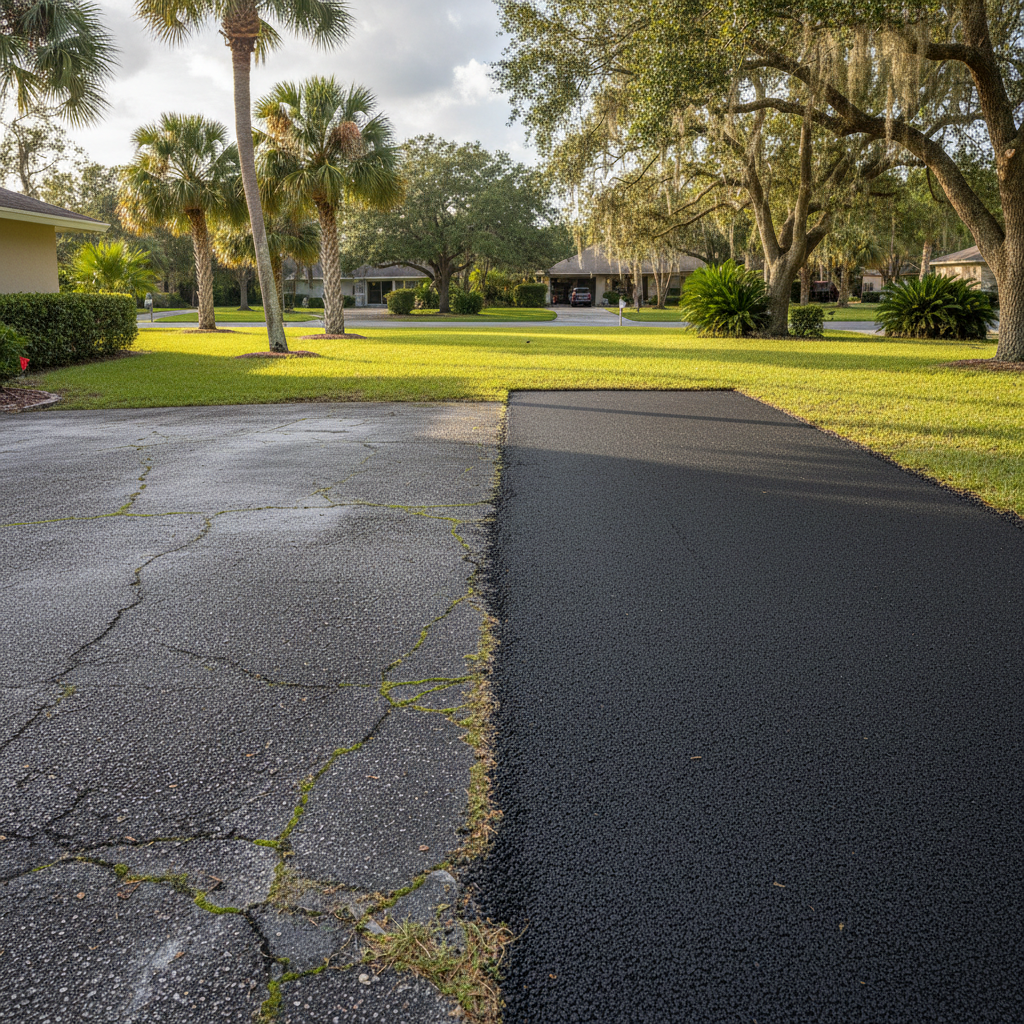
So, your asphalt driveway's seen better days, right? Cracks, potholes, maybe it just looks tired. You've probably heard about 'milling' as a way to fix it, but there are a couple of main ways to go about it: full depth or just taking off the top layer. Let's talk about what each means for your Orlando home and your wallet.
What's Full Depth Milling?
Full depth milling is exactly what it sounds like. We're talking about grinding up the entire asphalt layer, all the way down to the sub-base. Think of it like hitting the reset button on your driveway. We'll usually mill it down to a specific depth, sometimes 4-6 inches, depending on the original construction and what we're aiming for. This process takes out all the old, worn-out asphalt, including any deep cracks or structural issues that might be hiding underneath.
Once that's done, we often re-compact the existing sub-base if it needs it. Then we lay down fresh, new asphalt. It's a complete overhaul. For a lot of homes in places like Winter Park, where you might have older driveways that have really taken a beating from the sun and rain over decades, this can be the best long-term solution.
And What About Top Layer Milling?
Top layer milling, sometimes called 'surface milling' or 'shaving,' is a bit less aggressive. Here, we're only grinding off the top inch or two of your existing asphalt. It's like giving your driveway a really good shave. This approach is great for driveways that have surface-level issues — maybe a lot of alligator cracking that hasn't gone too deep, or if the surface is just really oxidized and faded. It can also fix minor drainage problems by adjusting the surface grade.
After we mill off that top layer, we clean it up and then put down a new layer of asphalt. It doesn't address any deep structural problems, but it gives you a fresh, smooth surface that looks brand new.
Cost: What's the Damage?
Let's be real, cost is usually the first thing homeowners think about. Full depth milling is almost always going to be more expensive upfront. You're removing more material, potentially doing more work on the sub-base, and then laying down a thicker layer of new asphalt. It's a bigger job, so it costs more in labor and materials.
Top layer milling is generally more budget-friendly. You remove less material and often put down a thinner new layer. It's a quicker process too. If your budget is tight and your driveway's issues are mostly cosmetic or shallow, this can be a good way to go.
Durability and Lifespan
This is where the differences really show. A full depth mill and replace is going to give you the longest-lasting solution. You're building a new driveway from the ground up, effectively. You're addressing any underlying issues that could cause problems down the road. With proper maintenance, a full depth job can easily last 20-25 years, sometimes more.
Top layer milling, while it looks great initially, won't last as long as a full depth job. You're essentially putting a new skin on an old body. If there are structural issues or deep cracks in the layers below, they'll eventually telegraph through that new top layer. You might get 8-12 years out of it, maybe a bit more if the underlying structure was pretty solid to begin with. But you're not getting the same foundational strength.
Maintenance and Appearance
Both methods will give you a fresh, clean appearance right after the job. A new asphalt surface always looks sharp. In terms of ongoing maintenance, both will benefit from regular sealing every few years. That's just good practice for any asphalt driveway, especially here in Florida with our intense sun and heavy rain. Sealing protects against oxidation and water penetration.
However, with top layer milling, you might start seeing issues reappear sooner if the original problems weren't just surface deep. Cracks that were just below the surface can work their way up. With full depth, you're starting with a clean slate, so those types of issues are much less likely to pop up for a long, long time.
My Recommendation for Orlando Homeowners
Look, I've been doing this a long time with Apex Asphalt Co, and I've seen a lot of driveways here in Orlando. Our soil, especially in areas with a lot of clay or sandy pockets, can be tricky. And the constant cycle of heavy rains and scorching sun really puts asphalt to the test.
If your driveway has significant cracking, potholes that keep coming back, or if it's just really old and you're planning on staying in your home for the long haul, I almost always recommend full depth milling. It's a bigger investment upfront, but you're getting a brand new, structurally sound driveway that will last you decades. You won't be dealing with recurring issues or needing another major repair in 8-10 years. It's the 'do it once, do it right' approach.
Now, if your driveway is relatively new (say, under 15 years old) and the issues are mostly cosmetic – a faded surface, some minor surface cracks, or just a little unevenness – then top layer milling can be a perfectly good, cost-effective solution. It'll give you a beautiful, smooth surface and extend the life of your driveway for a good chunk of time without breaking the bank.
The best way to figure it out? Have us come take a look. We'll give you an honest assessment of your driveway's condition and tell you which approach makes the most sense for your specific situation and budget. No pressure, just good advice from your local asphalt pros.